
Common Magnet Questions
Are supplied magnets and assemblies compliant to RoHS?
RoHS is the abbreviation of "The Restriction of the Use of Certain Hazardous Substance in Electrical & Electronic Equipment". According to European Community directive 2002/95/EC of 27th January 2003, the content of hazardous material of Pb, Cd, Hg, Cr6+, PBDEs and PBBs in all parts should be controlled within specified PPM. This directive was launched from 1st July 2006. All our magnets and magnetic assemblies have been convinced conforming to EU directive 2002/95/EC by SGS or other recognized third party.
How to make a magnet output maximum holding force?
Different magnetization pattern and forming magnet with pole pieces can output various holding force even if magnet with same dimension and at same property. Below figures offer reference on design a component for holding application.
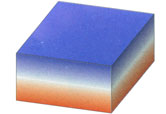
magnetised through thickness
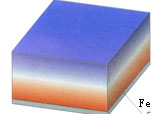
magnetised through thickness with iron backing plate
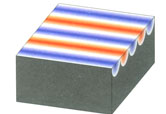
alternate poles on one surface
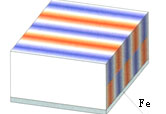
magnetised through thickness, but with iron backing plate
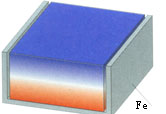
magnetised through thickness but in iron U-shape
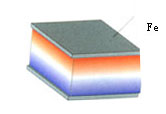
magnetised through thickness, but with two iron pole pieces
The above mentioned holding factors base consideration of anistropic hard ferrite magnet. Besides above examples, there are many other variants for certain applications. The indicated values are approximate one and depend on the strength of the iron backing plates, and on the volume of the magnet as well as on the structure of the magnet system.
What should be considered in designing permanent magnet?
Basic problems of permanent magnet design revolve around estimating the distribution of magnetic flux in a magnetic circuit, which may include permanent magnets air gaps, high permeability condition elements and electrical currents. Exact solutions of magnet design require complex and comprehensive analysis of many factors. From the view of a permanent magnet supplier, below factors on magnet should be considered:
- Magnet material type (covering magnetic, physical and mechanical properties)
- Magnetization pattern
- Geometry
- Dimension and tolerance
- Coating type
- Cost
- Working environment
- Assembling process
- Special requirement
It is not always possible to maximize all requirements at the same time. Below table offers brief comparison on different type permanent magnet and is intended to be beneficial to your design.
Material Quick Comparison
| Material Type | (BH)max (kJ/m³) | Tw (°C) | Tc (°C) | α(Br) (%/°C) | Anti Corrosion | Cost |
|---|---|---|---|---|---|---|
| Sintered Ferrite | 8.0–36.0 | -40 to 250 | 450 | -0.200 to -0.180 | Excellent | Cheap |
| Bonded Ferrite | 2.0–17.6 | -40 to 200 | — | — | Good | Cheap |
| Sintered NdFeB | 200–440 | 80–200 | 310–370 | -0.110 to -0.100 | Needs coating | High |
| Bonded NdFeB | 48–130 | 100–150 | — | — | Good | Medium |
| SmCo | 120–240 | 250–350 | 700–800 | -0.060 to -0.040 | Excellent | Very high |
| AlNiCo | 20–60 | up to 550 | 750–850 | -0.020 | Good | Medium |
Need a Custom Magnet Quote?
Send your grade, dimensions, coating and quantity — we reply within 24 hours.